Return of the 12
Ok, so as i've been wrangling with the Toshiba Portege I was reminded that somewhere in Atlanta there was a restored 12 inch Powerbook that I had parlayed for a nice carbon fiber road bike, many years ago. I was pretty certain that the powerbook was sitting on the shelf of a friend, in exactly the same condition that it was in when I traded it.
We're talking pretty old school though, like as old as you might want to go. For the sake of conversation, that being a conversation where we chat about why you might be inclined to invest in a old computer, there are some fascinating opportunities out there. I think this scenario of seeking out an old piece of hardware is mostly unique to Apple though. Occasionally a pc form factor will come around that is very exciting, but not ususally. The Apple hardware spec is so high end, if you don't have a early off the assembly line dud, or some weird occasional design misstep, you have a highly reliable piece of equipment in your hands. But why would you go backand when should you do it?
Now we're talking right? This is the reason for me to be writing tonight. "Paul, how can I buy some old shit to fit a needless niche in my life?" Glad you asked... Maybe we’re using computers wrong. Maybe the smart phone and the tablet should be our consumption devices and we should go back to focusing when we use a computer. If you’re interested in that idea you’re gonna keep reading, if only to hear the idea out. All that said, the person you should be getting/buying your old tech from is the frequent upgrader. This person has two or hree computers, they remember exactly what they paid for each computer and that is part of the reason for why they can't part with their classic collection. The frequent upgrader sometimes by default becomes a defacto collector cause their love for equipment never quite lines up with their acceptance of depreciation.
The upside of getting vintage hardware from the frequent upgrader is that they have the worlds best hardware (in this instance an eleven year old computer that is still banging around,) and the appropriate software suite to compliment it. What do we use computers for? We used to use great pieces of software and we'd store our files on the computer. The notion of the web as the resource for software, file storage and acting as virtual desktop is a new concept. What really muddies the water is that hardware for the last ten or so years has become "end of life" or retired cause of RAM constraints more than anything else. And I know for some that is a over simplification, but it isn't far off.
I guess the point is that most computers (when you're not buying cheap and underpowered) are potent for their time. This 12 inch powerbook that i'm writing on right now is more than powerful enough to write on and do simple image editing tasks and by simple I mean I can break out photoshop, work in layers and apply filters. I can also check my email and if I want to I can browse the web, but i can't open up twenty tabs and cruise to my hearts content. It's an interesting idea, but it's only an interesting idea if you want a great piece of hardware that has a very limited purpose, but man oh man, Apple makes some great computers.
This is a sneakernet thing though, while you can go online and buy an old powerbook for about three hundred dollars, you can skip the powerpc line and grab early macbooks and macbook airs for not much more money. No, you're gonna have to find people who have old powerbooks in their house and they can't just stand to get rid of them. The same person who couldn't bear to sell their computer for nearly nothing will give that computeraway if they think the other person will use it; sometimes we just want to know it found a good home.
So as deals come around. The first owner of the powerbook had really loved the computer, but they had killed it. I then came into possession of it and restored it, my initial investment was that I traded a LCD screen for it and I think that was it. It was a fair deal, a dead, slightly beat up 12 inch powerbook (and bag!) for a nice working LCD. I then sourced parts forthe powerbook and got it back up and running. It's possible I convinced my job to boot the costs, ahem... It was my main computer for a few years, till I upgraded to a 15inch powerbook. I then traded it for a nice road bike. My buddy I traded it too built the roadbike out of parts he had and some ebay deals. I got the upside of that deal, but only in the sense that the old apple hardware hold value and this computer has only depreciated about twenty five percent in the six years that I traded it away. Today i got it back and it cost me a LCD, we've come full circle.
How can it still be valuable, but not useful? And how did I get it back for a quarter of its value. One, it's great hardware, my ten year old pcs have not faired as well-so there is your physical value. Butthis computer is of no use to the person who wants to open a computer and have said computer be their looking glass to the Internet. Man, I really don't want that and there is a small contingency of people who also happen to be mac faithful who have computers which they use cause of the software, not the web-it is a novel concept. There isjust some amazing hardware and software out there, some truly great platforms that are nearly discarded cause of the web and cause of upgrades.
Here are the things I like the about the Powerbook 12
• Small form factor. She's dense but a very small package. Somehow the screen does not feel like a compromise though. Big upside versus the Portege
• The keyboard is a keyboard from ten years ago. They made great keyboards back then. They're really messing up keyboards now. This keyboard is dense, loud and has great travel. For a qwerty writer this keyboard is really quite pleasing.
• The mouse pad feels like something out of Germany, the click is loud and the action is clunky.
• The screen is a TFT XGA 1024x768 and it is both sharp yet somehow warm.
• OS X 10.5.8 is a pretty clean OS X instance from the past. If you're not doing a bunch of web stuff, or working to heavily in say Photoshop, you're in a very stable environment.
• Last thing. You have audio in and out jacks, firewire, ethernet, a modem, and a superdrive
• And you get that glowing apple on the back.
And here is the deal, mostly I want to type and leastly I want to web. I want a computer for computering. I know i'm writing this and putting it on the web-not sure if that is ironic, but there you have it. I'm gonna work on both machines and see how things shake out.
Magazine Articles
Mon 25 Jan 2016 09:19:19 PM EST
Today I began to wonder about what the transition must be like for corporate workers who go into other industries.
In my early professional years i'd read Time and Newsweek articles about people (usually well off boomers) who'd given up their high pay, high stress, high status jobs to make cheese, or become farmers, or learn to cobble shoes in Italy. Often times these fantastical stories had people who really struggled with the decision to go. Other times people were forced out with no choice, whether it was downsizing or burnout. And in many if not most of the stories the people either took their large savings, retirement fund or some other sum of money to jump start their new venture.
Trying to understsnd, decipher, make sense of or chart some plan reading magazine articles is for the birds.
I realize a huge part of my window onto the world was with magazine articles that explained life to me, except it didn't. In the same way that you really won't learn much about architecture reading Dwell; you really don't. You don't really learn much about the people, the human condition, or how to move through life with the contemporary magazine articles. But back then I had gone through my own transition and I didn't know it then, but I was looking for understanding.
I spent the first 14 years of my life upper lower class, I like to say. But even that assesment of my life is probably off. We werent lower class, we also weren't upper lower class. We were middle lower class. We didn't live in a ghetto. My father was not around though, so it was just my mother and I. We lived month to month and some months we did great, things would be stable, we might even go into a year or two of stability, inevitably we'd gypsy around though. By the time I was in my early twenties I was in my first decade of middle class life. We had moved on up as it was. My mother married, we moved to Atlanta, my step dad started a business and we busted our asses. If i'm going to be completely honest, they busted their asses and I took some advantage of the situation, but not nearly enough. We didn't know any better, any of us, we were riding by the seat of our pants. Hell, we were still living month to month, we were just on the upswing.
As I found myself building a career, moving up in the world, my parents were not able to help me very much with an outlook that offered any perspective on white collar, middle class living. Enter Time & Newsweek, US News, The Economist. There were not many "So you've become middle class! Here is what you should know" articles to read. Most of the articles were "White professionals have it good, even when they have to deal with change." And since that is what was out there, that is what I read. I also read the articles about how bleak it was for blacks, there were a lot of those.
Many of my life choices were framed by these people portrayed in the articles. Their life choices influenced my thinking and strategy. I didn't know it then, but I planned my life with the prism of "What would i do if I was white, successful and looking for a plan b that was both satisfying, fulfilling and still made enough money so that I wasn't destitue." I also entered the job force in the early nineties, which was a dreary time. The Savings and Loan disaster had happened, it was a brief blip in an otherwise already dreary time. Japan was beginning it's long recession and the eighties downturn looked like it was holding on to the first half of the nineties.
There is probably a box of magazines in my basement which chart my strategy in life.
I didn't do too bad...
I'm currently on sabbatical and debating if I am touristing around another industry or if i am leaving IT. A part of me does not want to embrace this new thing. If you've ever written a plan for yourself and given your future self instructions for how to live life, don't stop working on the plan for future you. Future you gets pretty dependent on your forward looking assessments to plan their life out. Problem is old me doesn't read those magazines anymore. Old me is disappointed with current me and what I made of my life. Current me doesn't know what the fuck is going on, future me is waiting for instruction.
Miscellaneous
I spent a few hours in the XP build trying to make it as lean as possible. Out with Java. Out with Flash, no programs loading with startup. But I still prefer to not be in a "rich" OS. So i'm back in Peppermint working with "Gedit" a no frills text editor. It looks like it has three features, it can save a doc, insert date and time and spell check-we'll see about that.
Spellcheck doesn't work... So it has two really good features.
I don't know how to feel about LED bulbs.
I have some big decisions to make, all of them change my life in a dramatic way, kinda scary.
Thoughts from inside a church.
1/24/2016 5:21:52 PM
I'm writing my annual blog entry.
I’ve come to realize that since The Big Change my relationship (symbiosis?) with the computer has been severed… This entry serves as acknowledgement that I'm attempting to reignite my writing voice.
In the corporate cage there was this balance that the computer and the handheld had. It doesn’t matter what kind of handheld I mean either. Android, IOS, phone, tablet. All of these devices served as companions to my digital journey, but the personal computer was my companion & primary interface, not a 3 inch slab. I don't write on handheld devices* Now most of my hand and eye time is with with tools, the handheld is my R2 unit. I think as a writer and explorer this new interfacing with the interweb is both disjointed and less than what I had before. And my personal relationship with the PC has suffered. Technical work is going along fine, but part of me is the computer. Part of how I express myself is in the qwerty, can be found in stream of conscious, I have lost that.
Truth be told though this all started a few years ago. Times have changed and who I was in the digital spectrum back then is not appropriate in this day and age. I don't think I could get away with living my life outloud, like I used to.
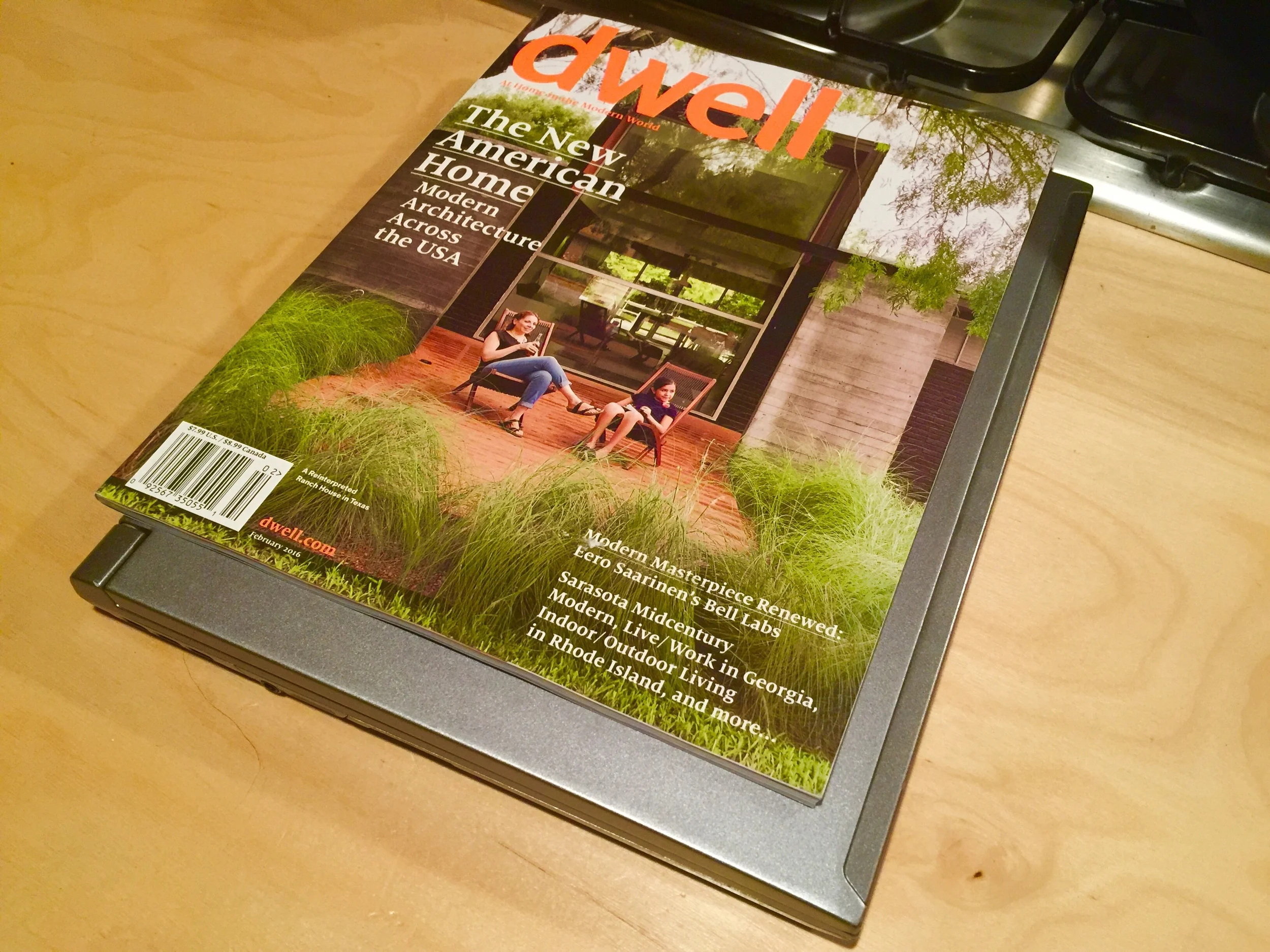
Protege r200-s2031 circa 2007
So this is how I find myself rocking a 1.3ghz Toshiba Portege with five hundred and twelve meg of ram, running windows XP. This lady has a modem jack, a physical switch to turn off wireless-which is off and nearly (?) ten year old battery that gives me maybe seventy minutes of use. It weighs a pound and a half, is about the size of a eleven inch macbook. I’m going to try to use this device to write without distraction-in small spurts. I find it really hard to take out my Vaio or Air to casually write, without getting lost in the web, picture editing or other fuckery. I think I’ve lost some part of myself and it is has something to do with my new life, gear and living situation. This will be part of what I attempt to explore in this new batch of writing.
*I don't write on handhelds much, but editing seems to be functional.
Miscellaneous...
This machine I’m working from is dual boot (high geekiness,) so in addition to Windows XP, It also has a linux distro called peppermint. This Linux install used to be a pretty positive build for lean computers, though I think its time has come to pass and the team is no longer updating Peppermint. I still like Peppermint for setting up an old machine, when you have low expectations and low requirements.
Other equipment that I’m using for this penny in time-traveling gear “retro fit” is a fourth gen ipod photo, it’s 30gb. I don’t know what I’m doing with it. I broke it and two other ipads out so that I could revive them and make some use of them in the home stereo system. Honestly, I don’t know what I’m going to do with it, but these old totems all tie into an era and this span of technology is in theory cross related in my memory, which could aid in my work on the old tech.
To that end… Each generation destroys the tech of the past. We find ourselves in this rush to assume the latest and greatest; progress is merciless. It works for moving us forward and in some way, it provides opportunities for the old timers to exit the low end of commoditization and become valuable again, the old stuff never completely goes away. It still brings no reason to the ipod. I’ll see if there is anything I can do with it.
1/24/2016 8:15:11 PM
Ok I totally worked out the ipod and what to do with it. While I’m deep scanning drives that I come across, I’m going to slowly build a greatest hits ipod that I can press play on and be ok with every song. In the past I’ve gotten stuck on wanting to have complete albums, which I think was a puritanical thing, not wanting to submit to the “buy the song” movement. Ten plus years later though the single and the album have their respective places. A lot of performers don’t really have an album I them. The new Missy Elliot WTF song is just fine by itself, it does not require other songs and really does make you want to go back to her back catalog. And I hated that Ryan Adams Taylor Swift cover album he did-too Andy Kaufman for my tastes. It is definitely intended as a album, not a single song though. This is Ipod will just be a curated “Every song is good to hear” kinda player. I feel kinda liberated.
Also, Toshiba provided the microdrives that powered the full sized iPods, this drive happens to be the same kind of miniature hard drive that runs in my laptop. I might need to line up donor parts now if I'm going to be using this little laptop regularly
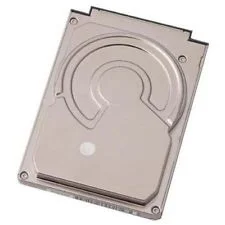
Toshiba Microdrive
In The Gutters...
February 2nd 2014
I consider myself a tenderfoot. I'm on my 3rd house remodel, but there is still so much to know and learn. I am probably a hybrid of sorts, in each of the house projects I've managed the remodel and also done much of the unskilled labor. In between that I've painted, caulked, nailed and participated in other parts of what it means to rehab a house. But no matter what I learn it seems like there is so much more to know.
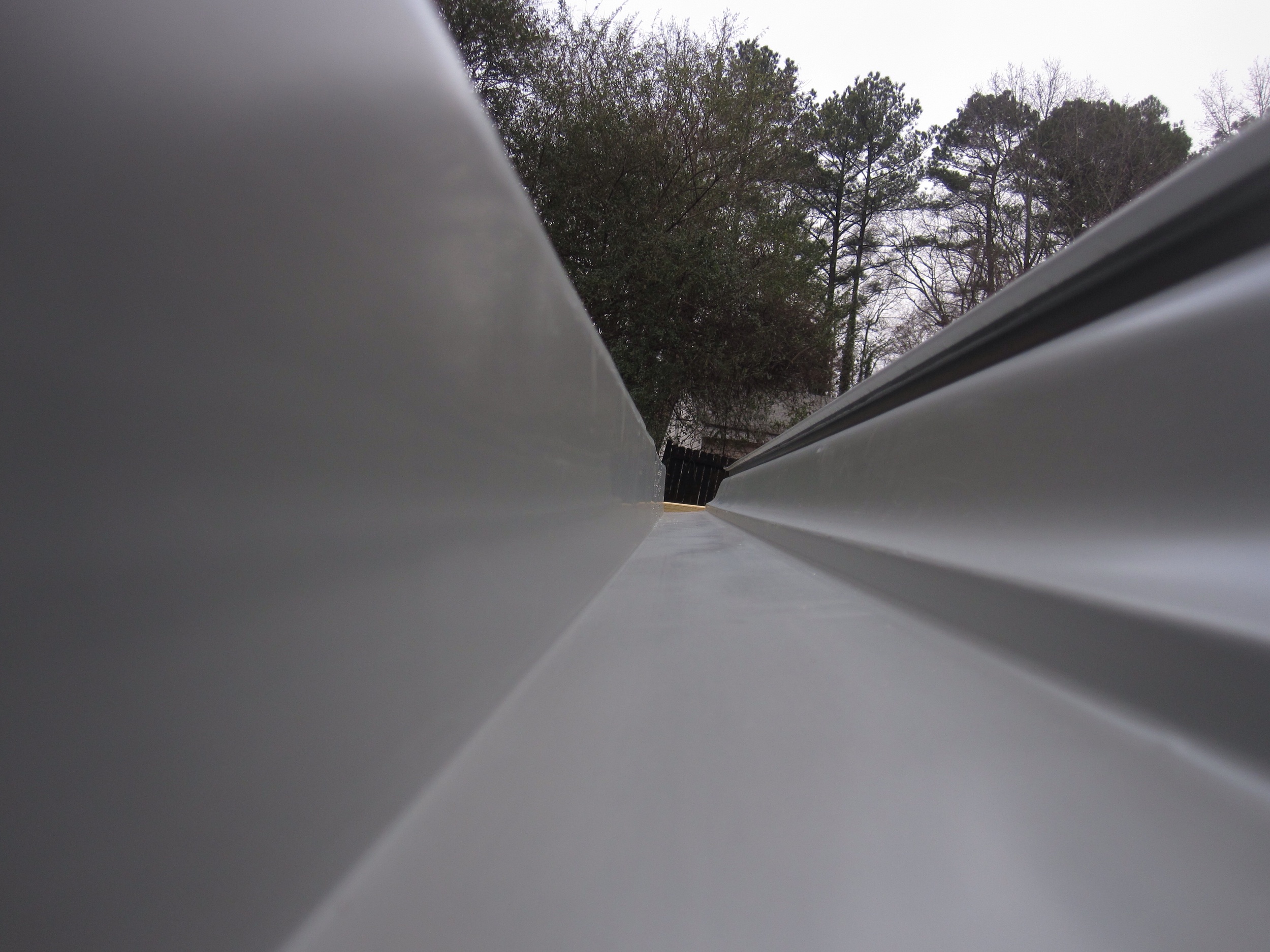
I am not a Carpenter. A day after closing though I found myself DIYing a eighteen foot length of gutter. This was my first gutter. I figured I was going to ruin the gutter. I figured I'd try to do one thing that day and gutters were the priority, so I started there. Gutters aren't hard. They come in six and ten foot lengths, you have to cap the ends, they have to be predrilled and glued. If you're joining lengths together they have to be riveted and glued. It's not horrible or complicated, but you can do a good or bad job. I did a bad job on That first day.
There is something about the process of carpentry, you have to think out what you're doing but once you get started you can only focus on the thing you're doing, you can't think ahead, you can't rush, you just have to go about your action and do it right. The first day, whatever you're doing is a sacrificial lamb, you will butcher whatever you touch. On that particular day I butchered that gutter.
But the first day for me is an agreement of sorts. I know I have to journey into a place where I can't think about a dozen things. I have to get my mind around executing on just one thing.
So while project managing is nothing but multitasking, doing good carpentry is one thing. I'm not good at one thing. My job is nothing but a constant juggle of fires and emergencies. Carpentry is just executing on one thing, then move on to the next.
So I knew my mind would drift and I knew I would have to give some offering to the gods and I did. I find the work side of doing houses to be both immensely satisfying and incredibly daunting.
TheP10Project Phase 2
We bought house number 2!
This time out we're going to try to reach past managing the build and doing grunt work. This time we're going to do much of the work and remodeling ourselves. We're going to envision and do it ourselves.
There is so much potential when you own a home. And so many of us do nothing more than decorate the interior, maybe plant annuals. I'm glad to say we got time on our hands and we're ready to build some sweat equity.
You have so much you have to do when you own a home, or it will come slowly down around you. The worse part is that slow decline. We steep in decay and rot, till it seems to far gone to save.
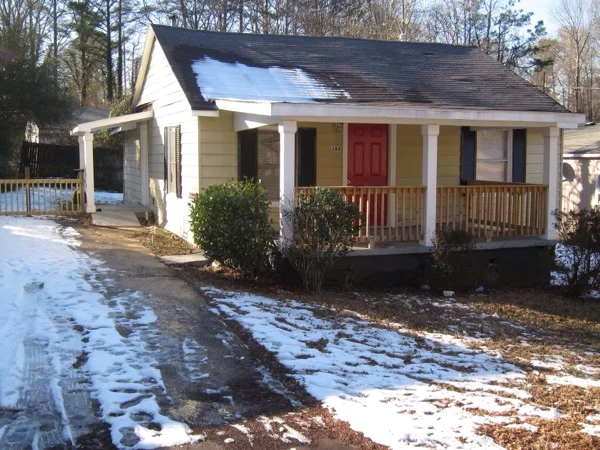
So we've found a six hundred and thirty square foot cottage. She's a diamond in the rough. Because of her age condition, and the era she was built in we're going to work to freshen the space, we don't want to gut her. We're going to try to celebrate her origin and modernize her amenities, while we're at it we hope to give the neighborhood a face lift.
In the first thirty days we're going to replace the roof, overhaul the HVAC, maybe replacing flooring and update the exterior. It's ambitious, but we need to do it, we got a renter coming and a 2nd inspection.